
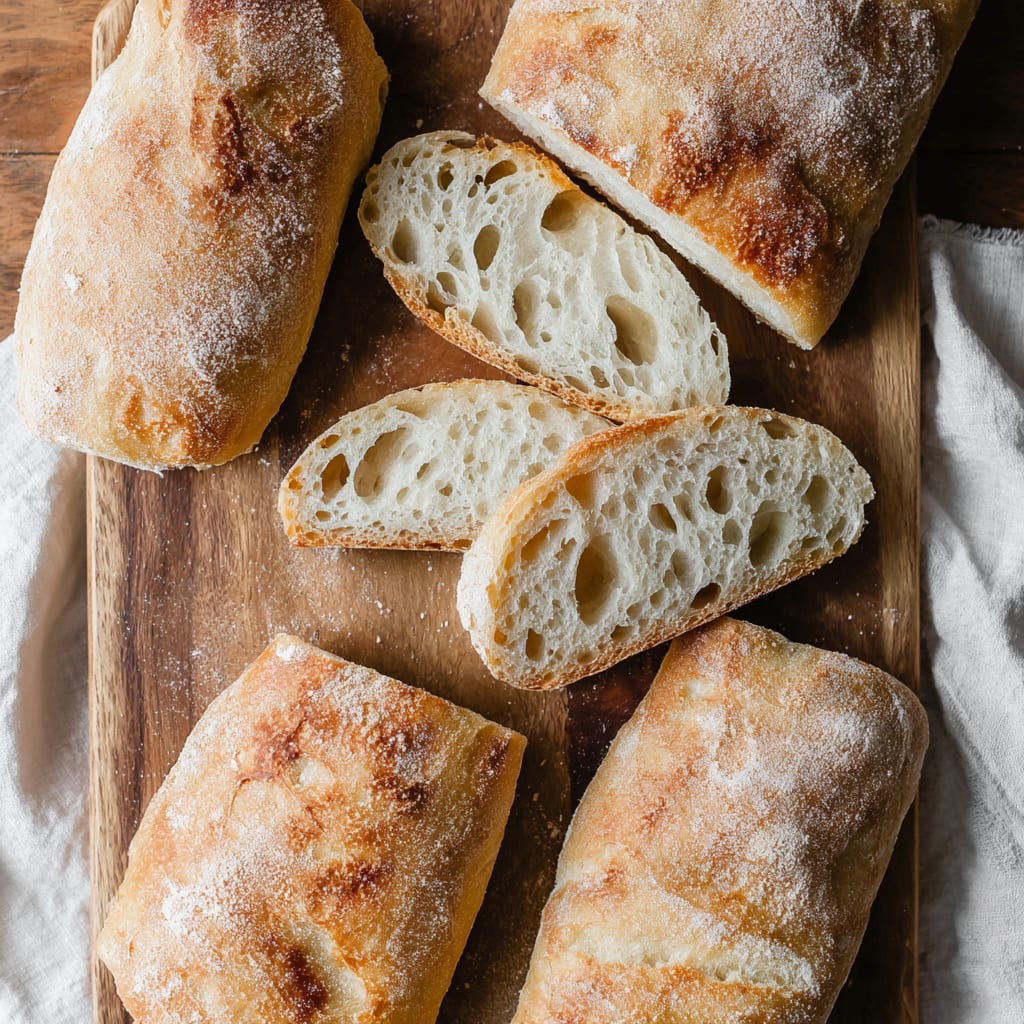
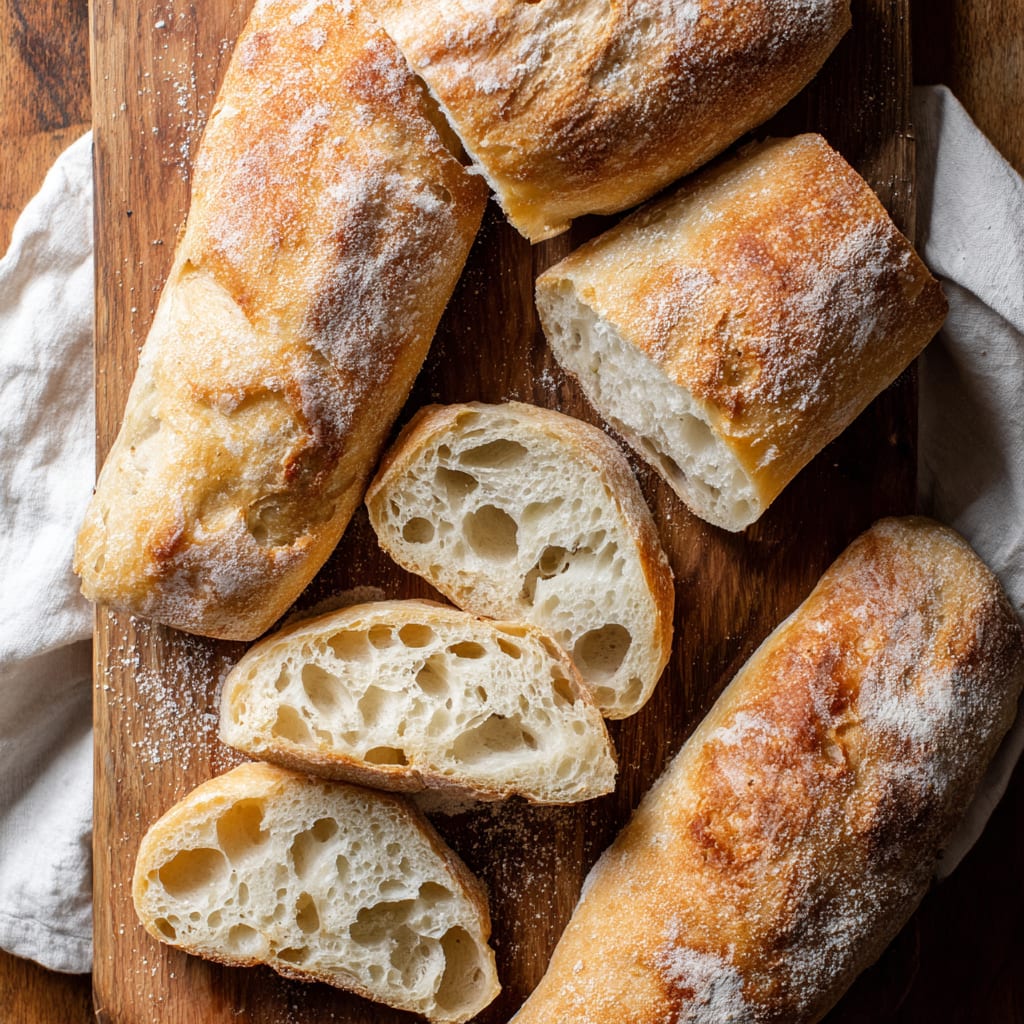
Imagine pulling a golden, blistered loaf from the oven — crackling crust giving way to a wild, open crumb that practically shimmers with moisture. Small batch sourdough ciabatta bread delivers all the drama of an artisan bakery, scaled perfectly for home bakers who don’t want a week’s worth of leftovers. This recipe leans on a high-hydration dough and a live starter to develop complex, tangy flavor you simply cannot buy in a store. You’ll learn how to mix, fold, and bake a perfectly airy ciabatta using minimal equipment and maximum technique.
Why You’ll Love This Recipe
Small batch sourdough ciabatta bread earns a permanent spot in your baking rotation for several compelling reasons. First, the batch size is intentionally small, meaning you get a fresh, bakery-quality loaf without overwhelming your kitchen or wasting ingredients. Second, the sourdough fermentation process works quietly in the background, building deep, tangy flavor while you go about your day. Third, the technique itself is surprisingly forgiving — no kneading required, just a few simple stretch-and-fold sessions that take less than a minute each. The result is a loaf with a shattering, golden crust, an impossibly light interior, and large irregular holes that trap butter, olive oil, or your favorite spread. Whether you call it small batch sourdough ciabatta, homemade sourdough ciabatta, or simply the best bread you’ve ever made, this recipe delivers restaurant-level results from your own oven.
Ingredients List for the Small Batch Sourdough Ciabatta Bread
You only need four pantry staples to make this incredible loaf. Gather everything before you begin so the process flows smoothly from start to finish.
• 60 grams sourdough starter (approximately 1/4 cup)
• 240 grams water, at room temperature (1 cup)
• 6 grams salt (1 teaspoon)
• 300 grams all-purpose flour (2 + 1/2 cups)
Pro Tips
Master these three techniques and your small batch sourdough ciabatta bread will turn out beautifully every single time.
Use a kitchen scale. Ciabatta dough operates at over 80% hydration, meaning even a small measurement error dramatically affects the final texture. Weighing ingredients in grams eliminates guesswork and guarantees consistency batch after batch.
Keep your hands wet, not floured. Adding flour during the stretch-and-fold sessions tightens the dough and undermines the open crumb you’re working hard to develop. Wet hands slide through the sticky dough effortlessly without altering the hydration ratio.
Trust the fermentation timeline, not the clock. Room temperature directly controls how fast your dough rises. On a warm day, the dough may double in four hours. On a cool day, it could take eight. The visual cue — nearly doubled in size with a slightly domed surface — is always more reliable than any timer.
Instructions
Step 1:
In a large mixing bowl, whisk to combine sourdough starter, water, and salt until the starter dissolves.
Step 2:
Add flour and mix well to combine, scraping down the sides of the bowl (there should be no dry flour particles visible). Cover the bowl and let the dough rest for one hour. Resting helps build gluten strength naturally.
Step 3:
Apply some water on your hands and stretch and fold the dough in the bowl by folding the edges over to the centre, one edge at a time. Wet hands make it easier to work with the dough and it should take you less than a minute to fold over all 4 sides. Cover with plastic wrap and let the dough rest for 30 minutes.
Step 4:
Stretch and fold the dough again, cover, and let dough rest until it almost doubles in size. It takes about 4 to 6 hours for the dough to double in size, depending on the room temperature (but it can take up to 8 hours if the room temperature is very cold). Since ciabatta dough is extremely wet and sticky with over 80% hydration, a couple sets of stretching and folding plus resting will be sufficient to build gluten strength, which results in chewy and tasty ciabatta bread.
Variations
Small batch sourdough ciabatta bread adapts beautifully to a handful of crowd-pleasing variations.
Rosemary and Sea Salt Ciabatta: Press a generous tablespoon of fresh rosemary leaves and a pinch of flaky sea salt into the dough during the final stretch-and-fold session. The herbs perfume the entire loaf and pair extraordinarily well with sourdough’s natural tang.
Olive and Sun-Dried Tomato Ciabatta: Fold roughly chopped kalamata olives and oil-packed sun-dried tomatoes into the dough before the final rise. These bold, briny additions transform a simple homemade sourdough ciabatta into an unforgettable appetizer bread.
Whole Wheat Ciabatta: Replace up to 20% of the all-purpose flour with whole wheat flour for a slightly nuttier, earthier flavor profile. The crumb will be marginally denser, but the signature chew and open texture remain very much intact.
Storage and Serving
Storing Your Bread
Once completely cooled, store small batch sourdough ciabatta bread at room temperature in a paper bag or a loosely wrapped kitchen towel for up to two days. Avoid plastic bags, which trap moisture and soften the crust prematurely. For longer storage, slice the loaf, place parchment between the slices, and freeze in an airtight bag for up to one month. Reheat frozen slices directly in a 375°F oven for eight to ten minutes to restore the crust’s signature crackle.
Serving Suggestions
Serve warm slices alongside a shallow bowl of good olive oil and cracked black pepper for dipping. This sourdough ciabatta bread is equally at home as the foundation for bruschetta, pressed sandwiches, or a simple caprese toast. Thick slices also make an exceptional base for avocado toast or a fried egg open-faced sandwich.
FAQs
Can I use whole wheat flour instead of all-purpose flour?
Yes, but substitute no more than 20% to preserve the open crumb and high hydration that define ciabatta’s signature texture.
My dough seems too wet and sticky. Is that normal?
Absolutely. This dough is designed to be extremely wet at over 80% hydration. Sticky dough is correct dough — wet hands and patience are all you need.
Can I refrigerate the dough overnight?
Yes. After the second stretch-and-fold, cover the bowl and refrigerate for up to 12 hours. A slow, cold ferment deepens flavor considerably. Allow the dough to come to room temperature before baking.
How do I know when my sourdough starter is ready to use?
A ripe starter doubles in size within four to eight hours of feeding, smells pleasantly tangy, and passes the float test — a small spoonful dropped into water should float.
Do I need a Dutch oven to bake this bread?
A Dutch oven creates the steam needed for a great crust, but a covered oven-safe pot or a baking stone with a steam pan also works well for this small batch sourdough ciabatta bread.

Small Batch Sourdough Ciabatta Bread
- Prep Time: 15 mins
- Cook Time: 30 mins
- Total Time: 45 mins
- Yield: 4 people 1x
- Category: Lunch
- Method: Cooking
- Cuisine: American
Description
Learn how to make Small Batch Sourdough Ciabatta Bread at home with our easy recipe. Discover the secret to perfect crust and crumb texture. Try it now!
Ingredients
- 60 grams sourdough starter (approximately 1/4 cup)
- 240 grams water, at room temperature (1 cup)
- 6 grams salt (1 teaspoon)
- 300 grams all-purpose flour (2 + 1/2 cups)
Instructions
- Step 1: In a large mixing bowl , whisk to combine sourdough starter, water, and salt until the starter dissolves.
- Step 2: Add flour and mix well to combine, scraping down the sides of the bowl (there should be no dry flour particles visible). Cover the bowl and let the dough rest for one hour. Resting helps build gluten strength naturally.
- Step 3: Apply some water on your hands and stretch and fold the dough in the bowl by folding the edges over to the centre, one edge at a time. Wet hands make it easier to work with the dough and it should take you less than a minute to fold over all 4 sides. Cover with plastic wrap and let the dough rest for 30 minutes.
- Step 4: Stretch and fold the dough again, cover, and let dough rest until it almost doubles in size. It takes about 4 to 6 hours for the dough to double in size, depending on the room temperature (but it can take up to 8 hours if the room temperature is very cold). Since ciabatta dough is extremely wet and sticky with over 80% hydration, a couple sets of stretching and folding plus resting will be sufficient to build gluten strength, which results in chewy and tasty ciabatta bread.
Notes
Try This Recipe and Leave a comment Below, your opinion matters to me!
Nutrition
- Serving Size: 4 serving
- Calories: 400
- Sugar: 5g
- Sodium: 400mg
- Fat: 10g
- Saturated Fat: 3g
- Unsaturated Fat: 7g
- Trans Fat: 0g
- Carbohydrates: 40g
- Fiber: 5g
- Protein: 15g
- Cholesterol: 50mg