
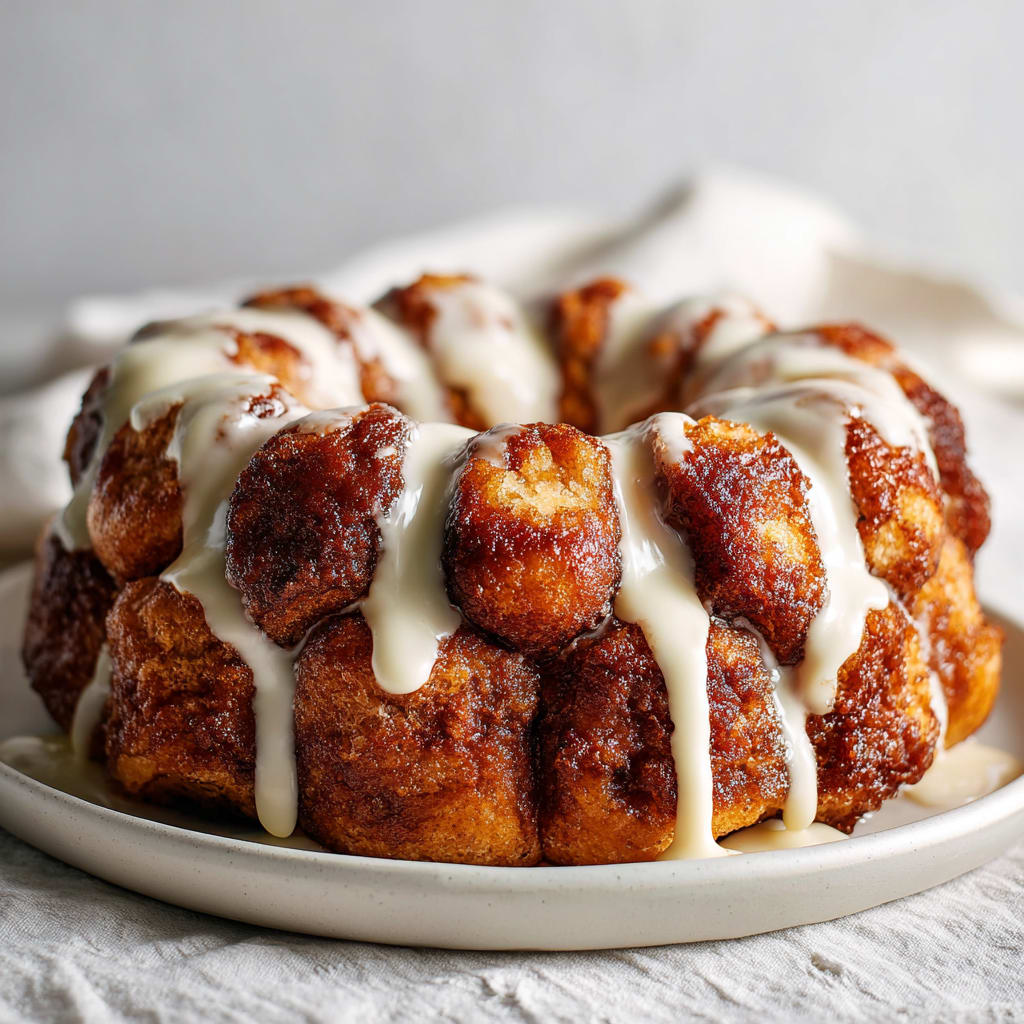
Imagine pulling apart warm, pillowy dough balls coated in buttery cinnamon sugar — that first bite is pure comfort. Sourdough Monkey Bread transforms a classic pull-apart treat into something even more special by using a naturally leavened starter for deeper flavor and a slightly tangy sweetness that sets it apart from ordinary versions. The long fermentation process not only builds complexity but also improves digestibility. Whether you’re baking for a weekend brunch or a holiday gathering, this recipe delivers every time. You’ll learn how to mix, ferment, shape, and frost this irresistible loaf from start to finish.
Why You’ll Love This Recipe
This Sourdough Monkey Bread is genuinely unlike anything you’ve pulled from your oven before. The sourdough starter works its magic during bulk fermentation, developing a subtly tangy undertone that cuts through the richness of the brown sugar cinnamon coating. Every bite is soft, chewy, and deeply caramelized around the edges. Beyond flavor, this recipe is wonderfully forgiving. The dough comes together with pantry staples, and both a same-day and overnight schedule are built right in, so it fits your timeline. The powdered sugar glaze drizzled on top adds a delicate sweetness that ties everything together beautifully. Whether you’re an experienced sourdough baker or just getting comfortable with your starter, this pull-apart sourdough bread recipe walks you through every step with confidence-building clarity. It is a guaranteed showstopper at any table.
Ingredients List for the Sourdough Monkey Bread
Gather everything before you begin. Having all your ingredients measured and at the correct temperature makes the mixing process smooth and efficient.
• 200 g filtered water
• 85 g sourdough starter, active and bubbly
• 70 g cane sugar
• 1 large egg, room temperature
• 8 g sea salt
• 430 g bread flour
• 8 tbs unsalted butter, room temperature (113g)
• 1 cup brown sugar, packed
• 1/2 tsp ground cinnamon
• 1/2 cup powdered sugar
• 1 tbs whole milk
Pro Tips
Getting the best results from this sourdough cinnamon pull-apart bread comes down to three key techniques.
Use an active, bubbly starter. Your starter should be fed and at peak activity before mixing. A sluggish starter leads to poor fermentation and dense dough. If your starter doesn’t pass the float test or show vigorous bubbling, give it another feed before baking.
Butter temperature matters enormously. Room temperature butter incorporates smoothly into the dough. Cold butter will tear the gluten structure and make mixing frustrating. Press your finger into the butter — it should yield completely with no resistance.
Don’t crowd the bundt pan. When dropping coated dough pieces into the pan, distribute them loosely. Overcrowding prevents even rising and makes the finished Sourdough Monkey Bread difficult to pull apart. Leave intentional gaps to give the dough room to expand beautifully during the second rise.
Instructions
Mix the Dough
Step 1: Warm the water until it is 120°F(50°C). It will be hot to the touch without burning you, similar to a hot bath. This will increase the overall dough temperature and shorten bulk fermentation so that your dough is ready to bake by dessert time. Skip this step and use room temperature water if you are making your monkey bread for breakfast and doing an overnight bulk fermentation. Take a look at my sample bakers schedule to see a timeline for both options.
Step 2: In a large bowl whisk together your active sourdough starter and water until the starter is completely dissolved. After that whisk in the sugar and room temperature egg.
Step 3: Sift in the flour and salt, mixing until a shaggy dough forms. Then add the butter and mix by hand or with a stand mixer until it is fully incorporated. It is important that the butter be room temperature or this step will be difficult. You can test your butter by pressing your finger into it. If you can push all the way through without resistance your butter is soft enough.
Strengthen the Dough
Step 1: After mixing, cover the dough with a damp cloth and allow it to rest for 30 minutes.
Step 2: Uncover the dough and knead in a stand mixer on medium speed with a dough hook attachment for about 12 minutes, or until the dough is smooth and elastic and fully pulls away from the sides. If working without a stand mixer strengthen the dough by hand. To do this perform three sets of stretch and folds. Click here to learn how to stretch and fold.
Bulk Fermentation
Step 1: Cover your bowl with a damp cloth to bulk ferment at 72°F(21°C) for 4-5 hours. If using room temperature water bulk ferment for 8-9 hours, or overnight. The dough will need to rise until it is almost double its original size. Rise times will also vary depending on the temperature of your home, add or subtract time if your home is cooler or warmer.
Shape and Coat the Dough
Step 1: Lightly flour your work surface before turning out the dough. Using a bench scraper or non-serrated knife, cut the dough into bite sized pieces. You do not need to be exact when cutting and some variation in size is expected.
Step 2: In a small mixing bowl stir together the brown sugar and cinnamon. Take each ball of dough and generously coat it by gently squeezing it in your hand with some of the brown sugar mixture.
Step 3: Drop the coated balls of dough into a well buttered 10″ bundt cake pan. Loosely but evenly distribute the pieces. Don’t over think this step and try to Tetris them into the pan. This will cause the dough to become packed and over crowded after second rise, resulting in monkey bread that is difficult to pull apart.
Second Rise
Step 1: Cover your bundt pan with a damp cloth and allow the monkey bread to rise at 72°F(21°C) for about two hours. At the end of second rise it will have risen slightly and become poofy. Rise times will also vary depending on the temperature of your home, add or subtract time if your home is cooler or warmer.
Bake and Frost
Step 1: Preheat your oven to 350°F(175°C). Once preheated, place your bundt pan on the lower center rack and bake for 35 minutes.
Step 2: Allow your monkey bread to cool for 15 minutes before inverting onto a large plate. If frosting your cake, whisk together the powdered sugar and milk, then drizzle it on top of your cake before serving.
Variations
This recipe is a wonderful base for creative twists that suit any occasion.
Apple Pie Sourdough Monkey Bread: Add finely diced, spiced apples between the dough layers before the second rise. The apple pieces caramelize beautifully in the oven alongside the brown sugar coating, adding a fruity, autumnal depth to every pull.
Chocolate Hazelnut Version: Substitute the cinnamon sugar coating with a mixture of cocoa powder and sugar, and tuck small pieces of chocolate or spoonfuls of hazelnut spread between the dough balls. The result is a decadent dessert pull-apart that chocolate lovers will obsess over.
Savory Herb and Cheese: Skip the sweet coating entirely and toss dough pieces in melted garlic butter, fresh rosemary, and shredded parmesan. This savory sourdough pull-apart bread is perfect alongside a bowl of soup or a holiday roast.
Storage and Serving
Sourdough Monkey Bread is best served warm, fresh from the oven. The caramelized coating softens as it cools, making that first pull straight from the inverted bundt pan the absolute highlight.
Storing leftovers: Cover any remaining monkey bread tightly with plastic wrap or transfer it to an airtight container. It keeps well at room temperature for up to two days or in the refrigerator for up to four days.
Reheating: Warm individual portions in the microwave for 20-30 seconds, or place the whole loaf in a 300°F(150°C) oven for 10 minutes until heated through. A brief reheat revives the soft, gooey texture almost entirely.
Serving suggestions: Serve alongside hot coffee, a spiced latte, or fresh orange juice. For brunch, pair it with scrambled eggs and fresh fruit for a satisfying, crowd-pleasing spread.
FAQs
Can I use discard instead of active starter?
Active, bubbly starter is strongly recommended for this recipe. Discard lacks the leavening power needed for proper fermentation, which would result in dense, under-risen dough. Always use a starter at peak activity.
Can I prepare this the night before?
Absolutely. Use room temperature water in the dough and bulk ferment overnight for 8-9 hours. Shape and coat your dough in the morning, allow the second rise, then bake fresh.
What if my dough doesn’t double during bulk fermentation?
Your home may be too cool. Move the dough to a warmer spot, such as near an oven or inside a turned-off oven with just the light on. Add extra time as needed.
Do I need a bundt pan specifically?
A 10-inch bundt pan gives the best structure and even baking for Sourdough Monkey Bread. A tube pan works as a substitute, but avoid regular cake pans as the dough won’t bake through evenly.
Why is my monkey bread difficult to pull apart?
Overcrowding the pan before the second rise is the most common cause. The dough needs space to expand. Distribute pieces loosely so each ball has room to puff up without fusing too tightly to its neighbors.
Sourdough Monkey Bread
- Prep Time: 15 mins
- Cook Time: 30 mins
- Total Time: 45 mins
- Yield: 4 people 1x
- Category: Dessert
- Method: Cooking
- Cuisine: American
Description
Discover the magic of Sourdough Monkey Bread with our easy recipe. Level up your baking game today!
Ingredients
- 200 g filtered water
- 85 g sourdough starter, active and bubbly
- 70 g cane sugar
- 1 large egg, room temperature
- 8 g sea salt
- 430 g bread flour
- 8 tbs unsalted butter, room temperature (113g)
- 1 cup brown sugar, packed
- 1/2 tsp ground cinnamon
- 1/2 cup powdered sugar
- 1 tbs whole milk
Instructions
Mix the Dough
- Step 1: Warm the water until it is 120°F(50°C). It will be hot to the touch without burning you, similar to a hot bath. This will increase the overall dough temperature and shorten bulk fermentation so that your dough is ready to bake by dessert time. Skip this step and use room temperature water if you are making your monkey bread for breakfast and doing an overnight bulk fermentation. Take a look at my sample bakers schedule to see a timeline for both options.
- Step 2: In a large bowl whisk together your active sourdough starter and water until the starter is completely dissolved. After that whisk in the sugar and room temperature egg.
- Step 3: Sift in the flour and salt, mixing until a shaggy dough forms. Then add the butter and mix by hand or with a stand mixer until the it is fully incorporated. It is important that the butter be room temperature or this step will be difficult. You can test your butter by pressing your finger into it. If you can push all the way through without resistance your butter is soft enough.
Strengthen the Dough
- Step 1: After mixing, cover the dough with a damp cloth and allow it to rest for 30 minutes.
- Step 2: Uncover the dough and knead in a stand mixer on medium speed with a dough hook attachment for about 12 minutes, or until the dough is smooth and elastic and fully pulls away from the sides. If working without a stand mixer strengthen the dough by hand. To do this perform three sets of stretch and folds. Click here to learn how to stretch and fold.
Bulk Fermentation
- Step 1: Cover your bowl with a damp cloth to bulk ferment at 72°F(21°C) for 4-5 hours. If using room temperature water bulk ferment for 8-9 hours, or overnight. The dough will need to rise until it is almost double its original size. Rise times will also vary depending on the temperature of your home, add or subtract time if your home is cooler or warmer.
Shape and Coat the Dough
- Step 1: Lightly flour your work surface before turning out the dough. Using a bench scraper or non-serrated knife, cut the dough into bite sized pieces. You do not need to be exact when cutting and some variation in size is expected.
- Step 2: In a small mixing bowl stir together the brown sugar and cinnamon. Take each ball of dough and generously coat it in by gently squeezing it in your hand with some of the brown sugar mixture.
- Step 3: Drop the coated balls of dough into a well buttered 10″ bunt cake pan. Loosely but evenly distribute the pieces. Don’t over think this step and try to Tetris them into the pan. This will cause the dough to become packed and over crowded after second rise, resulting in monkey bread that is difficult to pull apart.
Second Rise
- Step 1: Cover your bunt pan with a damp cloth an allow the monkey bread to rise at 72°F(21°C) for about two hours. At the end of second rise it will have risen slightly and become poofy. Rise times will also vary depending on the temperature of your home, add or subtract time if your home is cooler or warmer.
Bake and Frost
- Step 1: Preheat your oven to 350°F(175°C). Once preheated, place your bunt pan on the lower center rack and bake for 35 minutes.
- Step 2: Allow your monkey bread to cool for 15 minutes before inverting onto a large plate. If frosting your cake, whisk together the powdered sugar and milk, then drizzle it on top of your cake before serving.
Notes
Try This Recipe and Leave a comment Below, your opinion matters to me!
Nutrition
- Serving Size: 4 serving
- Calories: 400
- Sugar: 5g
- Sodium: 400mg
- Fat: 10g
- Saturated Fat: 3g
- Unsaturated Fat: 7g
- Trans Fat: 0g
- Carbohydrates: 40g
- Fiber: 5g
- Protein: 15g
- Cholesterol: 50mg