
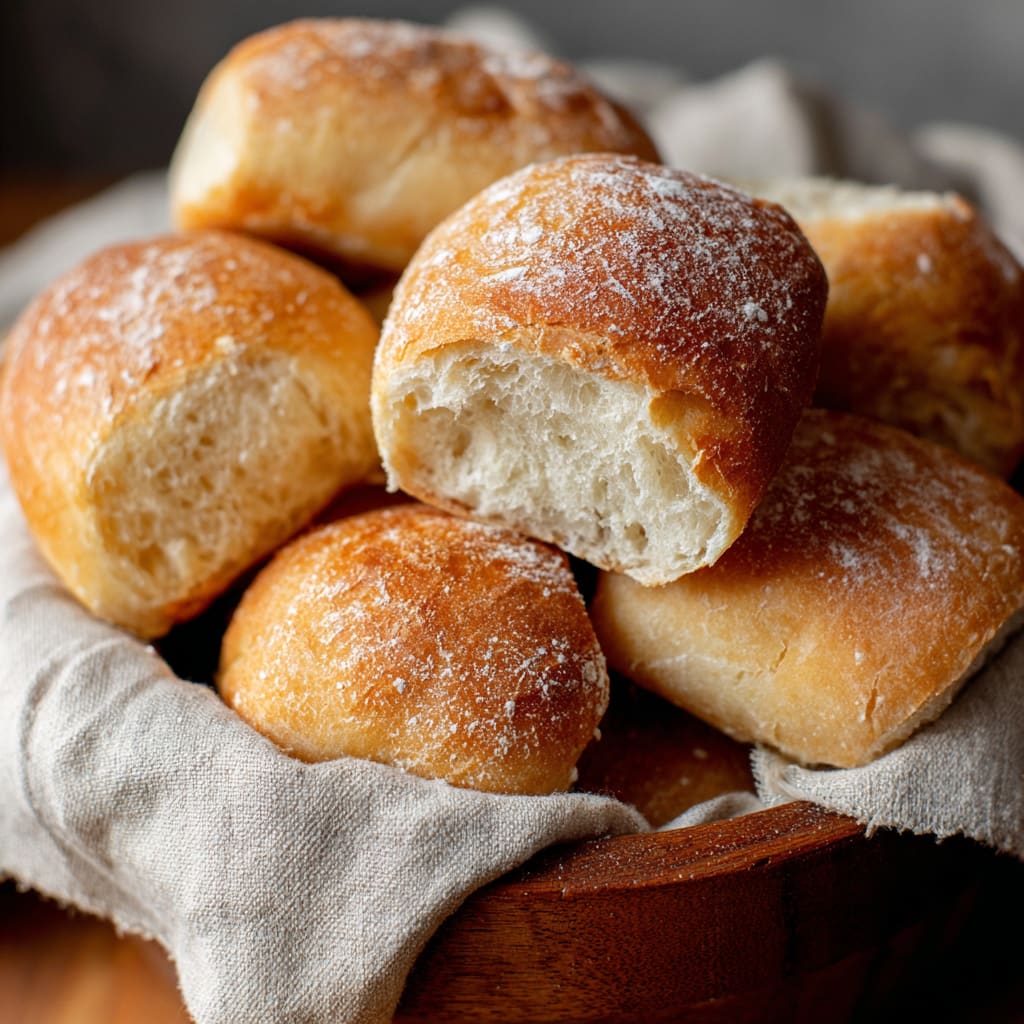
Imagine pulling apart a warm, crusty roll with a crackling golden exterior and an airy, hole-filled crumb inside — that’s exactly what easy small batch ciabatta rolls deliver. These rustic Italian-style rolls are beloved for their chewy texture, open crumb structure, and incredibly simple ingredient list. Whether you’re new to bread baking or a seasoned home baker, this approachable recipe makes artisan-quality bread achievable on any weekend. Unlike large batch recipes that leave you with more bread than you can eat, this small batch version yields just 4–5 rolls — perfect for small households. You’ll learn the proper dough technique, shaping method, and baking tips to master easy small batch ciabatta rolls from scratch.
Why You’ll Love This Recipe
These easy small batch ciabatta rolls are the kind of recipe that makes you feel like a professional baker without requiring any fancy equipment or advanced skills. The ingredient list is beautifully minimal — just four pantry staples — yet the results are bakery-worthy every single time. The high-hydration dough creates that signature open, bubbly crumb and a chewy interior that pairs perfectly with soups, sandwiches, and dipping oils. Because this is a small batch recipe, there’s no waste, and every roll gets eaten fresh. The stretch-and-fold technique used here replaces traditional kneading, making the process hands-off and forgiving. You’ll also love how the steam-baking method creates that irresistible crackly crust that shatters with each bite. Even beginner bakers can follow along confidently. These small batch homemade ciabatta rolls reward patience with extraordinary flavor and texture.
Ingredients List for the Easy Small Batch Ciabatta Rolls
You only need four simple ingredients to make these small batch artisan ciabatta rolls at home. Gather everything before you begin for a smooth and enjoyable baking process.
• 1 teaspoon instant yeast
• 240 grams water, at room temperature (approximately 1 cup)
• 300 grams all-purpose flour (approximately 2.5 cups)
• 1 teaspoon salt
Pro Tips
Master your dough hydration. Ciabatta dough is intentionally wet and sticky at 80% hydration. Resist the urge to add extra flour during mixing or shaping — that high moisture content is what creates the signature open crumb and chewy texture. Trust the process.
Wet hands are essential. When performing the stretch-and-fold steps, always wet your hands thoroughly before touching the dough. This prevents sticking without altering the dough’s hydration balance and makes the folding technique smooth and efficient.
Steam is non-negotiable. Placing a pan of water in the bottom of your oven before and during baking creates the steam environment that professional bakers rely on. This steam keeps the crust from setting too quickly, allowing the rolls to expand fully before forming that gorgeous, crackly golden shell. Never skip this step.
Instructions
Prepare the Dough (1 hour rise time):
Step 1: In small cup, dissolve instant yeast in lukewarm water and stir to mix together (the mixture should start to bubble and develop a yeasty aroma). Let it sit for 2 minutes.
Step 2: In a large bowl, add flour and salt. Pour in yeast mixture and whisk until fully combined, scraping down the sides of the bowl (there should be no dry flour particles visible). The mixture is very sticky and wet, with an 80% hydration (flour to water ratio).
Step 3: Cover the bowl with plastic wrap and let it sit at room temperature for 1 hour (Note that a higher room temperature will speed up the fermentation process and will cause the dough to rise faster).
Stretch and Fold the Dough (1.5 hour rise time):
Step 1: Apply some water onto your hands and stretch and fold the dough in the bowl by folding the edges into the centre, one edge at a time. Wet hands make it easier to work with the dough and it should take you less than a minute to fold all 4 sides. Cover with plastic wrap and let the dough rest for 30 minutes.
Step 2: Repeat this stretch and fold step, then cover with plastic wrap and let the dough rest for another 30 minutes. Then, repeat the stretch and fold step a final time and let it rest for another 30 minutes. After 3 rounds of stretch and folds with 30 minute resting periods, the dough will rise and approximately double in size.
Shape the Dough (40 minutes rise time):
Step 1: Transfer dough to a floured surface. Note that the dough will still be very sticky and that is okay. Sprinkle dough with a little flour and shape it into a rectangle by gently pulling the dough from underneath. Be careful not to press the dough because the air holes trapped inside might get squeezed out.
Step 2: Roll the dough into a log and press the edge to seal. Divide the rolled dough into 4-5 equal parts, and place each piece at least two inches apart, onto a well-floured work surface. Let the dough rest for about 40 minutes. This is called the final proofing.
Bake the Ciabatta Rolls:
Step 1: Carefully transfer each dough onto a parchment-lined 8×12-inch baking tray. Because the dough is still quite sticky, dust with flour to help with handling it. Set aside.
Step 2: Fill a baking pan with water and place it in the bottom of your oven. Preheat the oven to 420 F, and allow it to fill with steam from the water. When the oven is ready, slide the baking tray in and spray some water over the dough immediately. Bake for 20 minutes.
Step 3: Let the bread cool for 20 minutes. To check if the bread is done, you can tap the bottom of the bread with your finger. The bread will sound hollow when they are done.
Variations
These easy small batch ciabatta rolls are wonderfully versatile and easy to customize.
Rosemary and Sea Salt Ciabatta: Add 1 tablespoon of finely chopped fresh rosemary directly into the dough during the mixing stage. Once the rolls are on the baking tray, sprinkle flaky sea salt over the tops before baking. The herbaceous aroma and salty crunch elevate these small batch ciabatta rolls beautifully.
Garlic and Olive Oil Ciabatta: Brush the shaped rolls with a mixture of minced garlic and good quality olive oil just before they go into the oven. This adds a rich, savory depth that makes these rolls ideal for serving alongside pasta dishes or hearty soups.
Whole Wheat Ciabatta Rolls: Replace up to 30% of the all-purpose flour with whole wheat flour for a nuttier, earthier flavor profile while maintaining the characteristic open crumb structure.
Storage and Serving
Storing your rolls: Once completely cooled, store easy small batch ciabatta rolls in a paper bag at room temperature for up to 2 days. Avoid plastic bags, which trap moisture and soften the crust. For longer storage, wrap rolls individually in plastic wrap, place in a freezer-safe bag, and freeze for up to 1 month. Reheat frozen rolls directly in a 375°F oven for 8–10 minutes.
Serving suggestions: These rolls shine when sliced horizontally and used as sandwich bread — try them with prosciutto, mozzarella, and fresh basil. Serve them warm alongside minestrone, tomato soup, or pasta dishes for an authentic Italian table experience. They’re also extraordinary simply torn apart and dipped into high-quality olive oil mixed with balsamic vinegar.
FAQs
Why is my ciabatta dough so sticky?
That’s completely normal and intentional. The high water content (80% hydration) is what gives ciabatta its signature open crumb and chewy texture. Wet hands and a well-floured surface are your best tools.
Can I use active dry yeast instead of instant yeast?
Yes, but you’ll need to proof active dry yeast in warm water for 5–10 minutes until foamy before using it. The rise times may be slightly longer.
What if my kitchen is very cold?
A cold environment slows fermentation. Place the covered dough in a slightly warm oven (oven light on only) to encourage proper rising during the 1-hour and stretch-and-fold stages.
Why do I need steam in the oven?
Steam prevents the crust from hardening too early, allowing the rolls to expand fully. It’s what creates that bakery-style crackly crust on easy small batch ciabatta rolls.
Can I double this recipe?
Absolutely. Simply double all four ingredients proportionally. Use a larger bowl for mixing and ensure your baking tray accommodates adequate spacing between the rolls.

Easy Small Batch Ciabatta Rolls
- Prep Time: 15 mins
- Cook Time: 30 mins
- Total Time: 45 mins
- Yield: 4 people 1x
- Category: Lunch
- Method: Cooking
- Cuisine: American
Description
Want to bake delicious bread at home? Try making Easy Small Batch Ciabatta Rolls for a tasty treat today!
Ingredients
- 1 teaspoon instant yeast
- 240 grams water, at room temperature (approximately 1 cup)
- 300 grams all-purpose flour (approximately 2.5 cups)
- 1 teaspoon salt
Instructions
Prepare the Dough (1 hour rise time):
- Step 1: In small cup, dissolve instant yeast in lukewarm water and stir to mix together (the mixture should start to bubble and develop a yeasty aroma). Let it sit for 2 minutes.
- Step 2: In a large bowl, add flour and salt. Pour in yeast mixture and whisk until fully combined, scraping down the sides of the bowl (there should be no dry flour particles visible). The mixture is very sticky and wet, with an 80% hydration (flour to water ratio).
- Step 3: Cover the bowl with plastic wrap and let it sit at room temperature for 1 hour (Note that a higher room temperature will speed up the fermentation process and will cause the dough to rise faster).
Stretch and Fold the Dough (1: 5 hour rise time):
- Step 1: Apply some water onto your hands and stretch and fold the dough in the bowl by folding the edges into the centre, one edge at a time. Wet hands make it easier to work with the dough and it should take you less than a minute to fold all 4 sides. Cover with plastic wrap and let the dough rest for 30 minutes.
- Step 2: Repeat this stretch and fold step, then cover with plastic wrap and let the dough rest for another 30 minutes. Then, repeat the stretch and fold step a final time and let it rest for another 30 minutes. After 3 rounds of stretch and folds with 30 minute resting periods, the dough will rise and approximately double in size.
Shape the Dough (40 minutes rise time):
- Step 1: Transfer dough to a floured surface. Note that the dough will still be very sticky and that is okay. Sprinkle dough with a little flour and shape it into a rectangle by gently pulling the dough from underneath. Be careful not to press the dough because the air holes trapped inside might get squeezed out.
- Step 2: Roll the dough into a log and press the edge to seal. Divide the rolled dough into 4-5 equal parts, and place each piece at least two inches apart, onto a well-floured work surface. Let the dough rest for about 40 minutes. This is called the final proofing.
Bake the Ciabatta Rolls:
- Step 1: Carefully transfer each dough onto a parchment-lined 8×12-inch baking tray. Because the dough is still quite sticky, dust with flour to help with handling it. Set aside.
- Step 2: Fill a baking pan with water and place it in the bottom of your oven. Preheat the oven to 420 F, and allow it to fill with steam from the water. When the oven is ready, slide the baking tray in and spray some water over the dough immediately. Bake for 20 minutes.
- Step 3: Let the bread cool for 20 minutes. To check if the bread is done, you can tap the bottom of the bread with your finger. The bread will sound hollow when they are done.
Notes
Try This Recipe and Leave a comment Below, your opinion matters to me!
Nutrition
- Serving Size: 4 serving
- Calories: 400
- Sugar: 5g
- Sodium: 400mg
- Fat: 10g
- Saturated Fat: 3g
- Unsaturated Fat: 7g
- Trans Fat: 0g
- Carbohydrates: 40g
- Fiber: 5g
- Protein: 15g
- Cholesterol: 50mg