
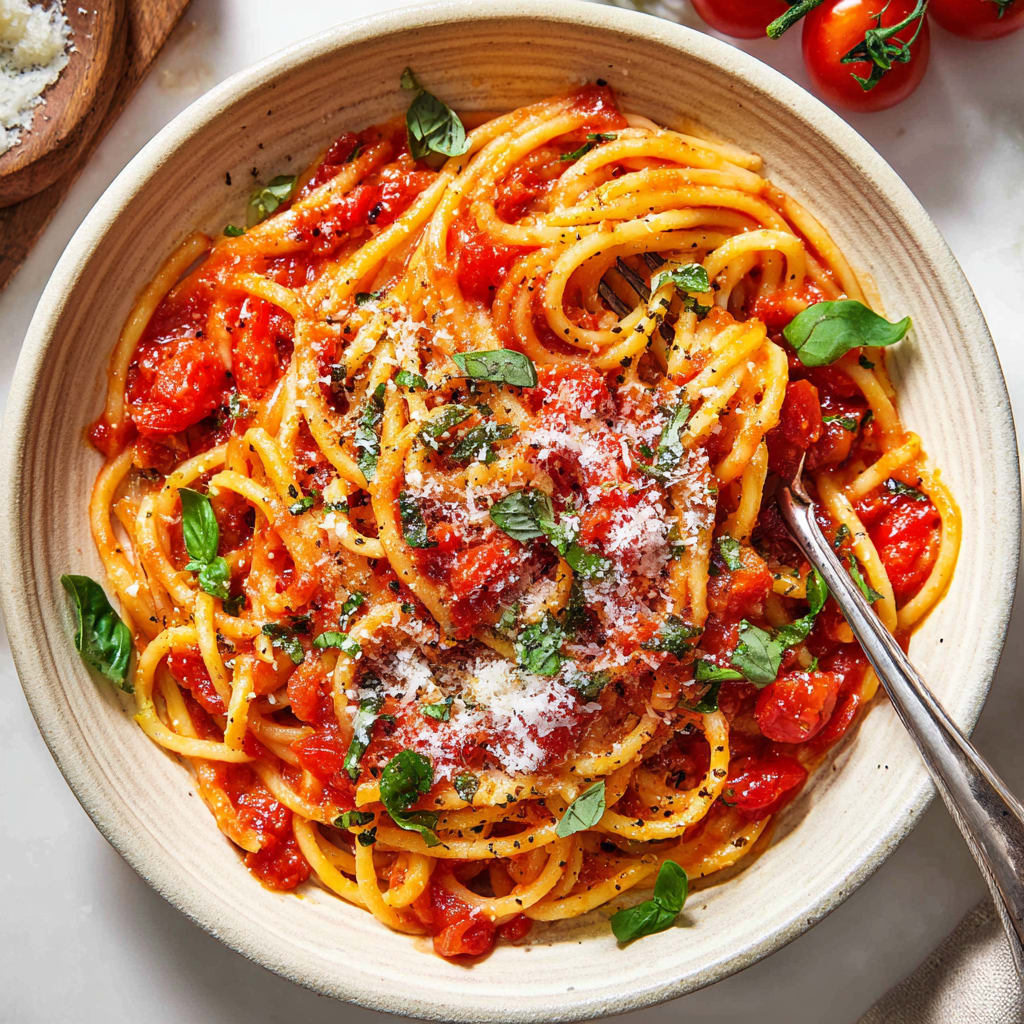
The rich, aromatic flavors of Pasta Napoletana instantly transport you to the sun-drenched streets of Naples with each twirl of your fork. This classic Italian dish combines the bright acidity of vine-ripened tomatoes with fragrant herbs and perfectly al dente pasta to create a simple yet deeply satisfying meal. Pasta Napoletana stands out from other tomato-based pasta recipes through its authentic preparation method and balanced flavor profile that has been perfected over generations. You’ll learn how to create this timeless dish at home using traditional techniques that bring out the natural sweetness of tomatoes while maintaining that distinctly Neapolitan character.
Why You’ll Love This Recipe
Pasta Napoletana is the epitome of Italian comfort food that manages to be both rustic and refined. You’ll appreciate the harmonious balance of flavors – the natural sweetness of long-simmered tomatoes playing against the savory depth of garlic and the bright lift of fresh basil. The silky sauce clings perfectly to the pasta, creating a satisfying texture in every bite.
What makes this recipe truly special is its simplicity. With just a handful of quality ingredients, you can create a restaurant-worthy dish that tastes like it’s been cooking all day, even though it comes together relatively quickly. The contrast between the slight chew of properly cooked pasta and the velvety smoothness of the sauce creates a textural experience that keeps you coming back for more.
Perhaps best of all, Pasta Napoletana is endlessly adaptable to your preferences while still maintaining its authentic character. It’s the kind of recipe you’ll find yourself returning to again and again, perfecting your technique with each preparation until it becomes second nature.
Ingredients
To make authentic Pasta Napoletana for 4 people, you’ll need:
- 1 pound (450g) pasta (spaghetti or bucatini work best)
- 2 pounds (900g) ripe San Marzano tomatoes (or high-quality canned whole tomatoes)
- 3 tablespoons extra virgin olive oil
- 4 cloves garlic, thinly sliced
- 1 small onion, finely diced (about 1 cup/150g)
- 1 teaspoon granulated sugar (optional, only if tomatoes lack sweetness)
- 1 teaspoon red pepper flakes (optional, for heat)
- 1 bunch fresh basil (about 1 ounce/30g), leaves torn
- 2 tablespoons unsalted butter (optional, for richness)
- Salt and freshly ground black pepper, to taste
- Freshly grated Parmigiano-Reggiano or Pecorino Romano cheese for serving
San Marzano tomatoes are the traditional choice for Neapolitan sauce, prized for their sweet flavor and low acidity. They create the distinctive sweet-savory balance that defines classic tomato sauce from Naples.
Pro Tips
To elevate your Pasta Napoletana from good to exceptional, focus on these three critical techniques:
First, properly prepare your tomatoes. If using fresh tomatoes, blanch them briefly in boiling water, then shock in cold water before peeling. This removes the bitter skins while preserving the fruit’s vibrant flavor. When using canned tomatoes, crush them by hand rather than a food processor – this creates the ideal rustic texture with both chunks and smooth sauce.
Second, master the oil infusion phase. Begin by gently heating your olive oil with sliced garlic over medium-low heat. This slowly releases the garlic’s aromatic compounds into the oil without burning, creating a foundational flavor that permeates the entire dish. Watch carefully – garlic should turn golden, not brown, which would introduce bitterness.
Third, respect the pasta cooking process. Use abundantly salted water (it should taste like the sea), and cook the pasta only until it’s firmly al dente – slightly firmer than you might expect. Finish cooking the pasta directly in the sauce for the last minute or two, allowing it to absorb the flavors while releasing starch that naturally thickens the sauce and helps it cling to each strand.
Step-by-Step Instructions
Step 1
Prepare your tomatoes. If using fresh tomatoes, bring a large pot of water to a boil. Cut a small X at the bottom of each tomato and blanch for 30 seconds. Transfer to an ice bath, then peel, remove seeds, and roughly chop. If using canned tomatoes, drain and crush by hand, reserving the juice.
Step 2
In a large, heavy-bottomed pan, heat olive oil over medium heat. Add the sliced garlic and cook until fragrant and just beginning to turn golden, about 1-2 minutes. Be vigilant here – you want to infuse the oil without burning the garlic.
Step 3
Add diced onion to the pan and sauté until translucent, about 5 minutes. Season with a pinch of salt to help draw out moisture and prevent browning.
Step 4
Add your prepared tomatoes to the pan along with their juices. Stir to combine with the garlic and onions. If your tomatoes lack natural sweetness, add the optional teaspoon of sugar. Include red pepper flakes now if you’re using them.
Step 5
Bring the sauce to a gentle simmer, then reduce heat to low. Let it cook uncovered, stirring occasionally, for about 25-30 minutes until it thickens and develops a rich flavor. The slow cooking allows the natural sugars in the tomatoes to caramelize slightly, creating depth.
Step 6
While the sauce simmers, bring a large pot of generously salted water to a rolling boil. Add pasta and cook until very al dente (about 2 minutes less than the package instructions suggest).
Step 7
Reserve 1 cup of pasta cooking water before draining. Add the drained pasta directly to your sauce, along with about ¼ cup of the reserved pasta water. Increase heat to medium and toss continuously, allowing the pasta to finish cooking in the sauce for 1-2 minutes.
Step 8
Remove from heat and stir in torn basil leaves and optional butter for added richness. If the sauce needs thinning, add more pasta water a tablespoon at a time until you reach your desired consistency.
Step 9
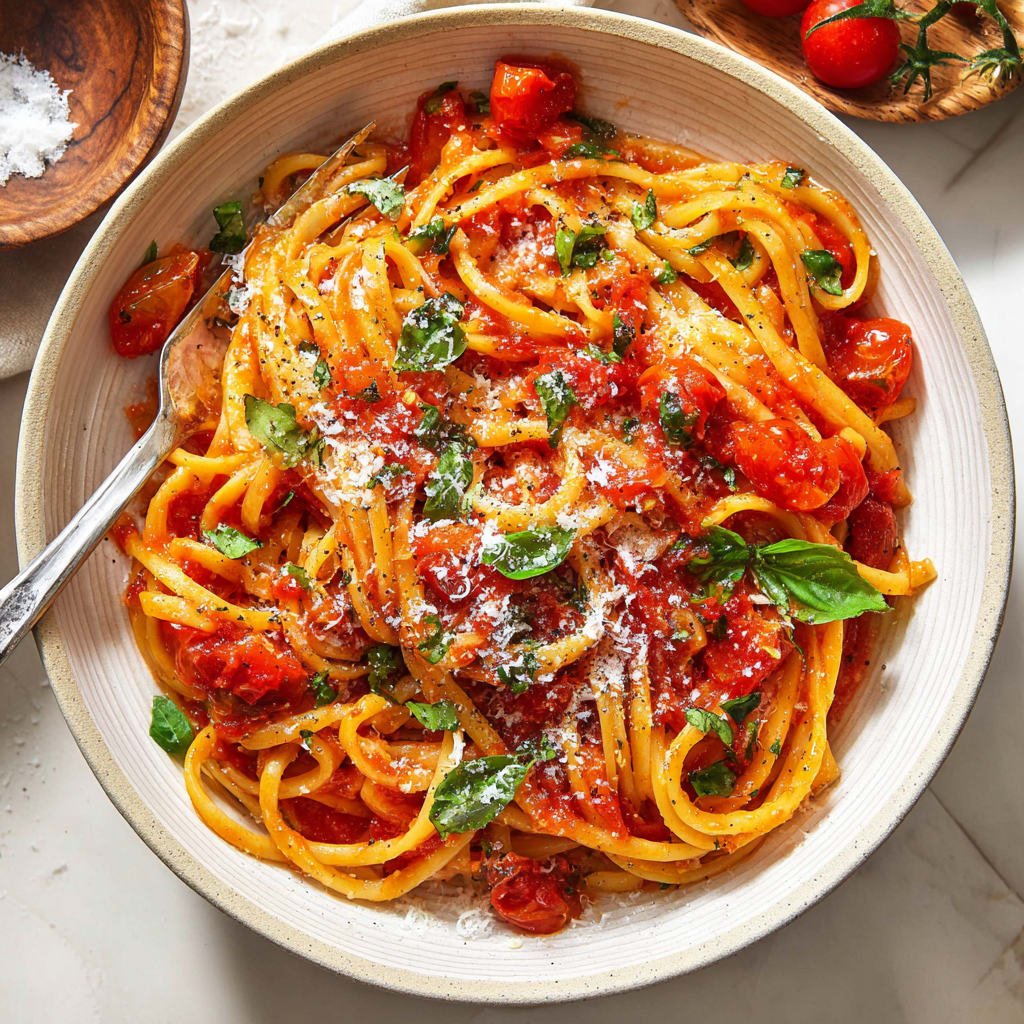
Taste and adjust seasoning with salt and pepper. Serve your Pasta Napoletana immediately in warmed bowls, garnished with additional basil and freshly grated cheese.
Variations
Pasta Napoletana with Seafood: Transform your basic Napoletana sauce into a coastal Italian delight by adding 1 pound (450g) of mixed seafood like shrimp, calamari, and mussels during the last 5 minutes of cooking. The seafood infuses the sauce with briny sweetness that pairs beautifully with the tomatoes. Use a splash of white wine when adding the seafood to create additional depth.
Vegetable-Packed Napoletana: For a more nutritious version, incorporate 2 cups of seasonal vegetables like diced eggplant, zucchini, and bell peppers. Sauté these vegetables after the onions until slightly softened before adding tomatoes. This variation, sometimes called “alla ortolana” (gardener’s style), makes your Neapolitan pasta sauce even more colorful and textured.
Gluten-Free Napoletana: This classic sauce works beautifully with gluten-free pasta alternatives. For best results, choose corn and rice-based pasta shapes that hold their structure well, like fusilli or penne. Reduce the pasta cooking time by 1-2 minutes and be especially careful during the sauce-finishing stage to prevent the pasta from becoming mushy.
Storage and Serving
Your Pasta Napoletana sauce can be stored separately from the pasta in an airtight container in the refrigerator for up to 5 days. The flavors often develop and deepen overnight, making this an excellent make-ahead option. For longer storage, freeze the sauce in portion-sized containers for up to 3 months. Thaw overnight in the refrigerator before reheating gently on the stovetop with a splash of water.
For the most authentic Neapolitan experience, serve your pasta in warmed bowls with a drizzle of high-quality extra virgin olive oil and a generous sprinkle of freshly grated Parmigiano-Reggiano. Pair with a simple arugula salad dressed with lemon juice and olive oil for a balanced meal.
For a more substantial presentation, serve Pasta Napoletana alongside grilled Italian sausages or a piece of breaded chicken cutlet (pollo alla Milanese). A basket of crusty Italian bread makes an ideal accompaniment for soaking up any remaining sauce – a practice so beloved in Italian cuisine it has its own name: “fare la scarpetta” (making the little shoe).
FAQs
What type of pasta works best with Napoletana sauce?
Long pasta shapes like spaghetti or bucatini are traditional for Pasta Napoletana as they hold the smooth sauce perfectly. However, tube shapes like rigatoni or penne also work well, especially if you prefer pasta that catches small chunks of tomato in their cavities.
Can I make Pasta Napoletana without fresh basil?
While fresh basil provides the authentic flavor, you can substitute 1 tablespoon of dried basil added during cooking. Alternatively, fresh flat-leaf parsley can provide greenery and freshness, though the flavor profile will be different.
Why is my Napoletana sauce too acidic?
This usually happens with underripe tomatoes. Add ½ teaspoon of baking soda to neutralize acidity, or include the optional butter which helps balance acidity naturally. Never increase sugar beyond 1 teaspoon, as authentic Pasta Napoletana should not taste sweet.
How can I make my sauce smoother?
Traditional Napoletana sauce has some texture. However, if you prefer a smoother consistency, use an immersion blender before adding the pasta, or pass the sauce through a food mill for the silkiest result.
Is Pasta Napoletana the same as spaghetti with marinara?
While similar, Pasta Napoletana is specifically from Naples and typically includes onions and sometimes butter for richness. Marinara is generally simpler, quicker to make, and often omits onions while focusing on garlic and oregano flavors.
Pasta Napoletana
- Prep Time: 15 minutes
- Cook Time: 40 minutes
- Total Time: 55 minutes
- Yield: 4 servings 1x
- Category: Dinner
- Method: Simmering
- Cuisine: Americaine
Description
Pasta Napoletana: Classic Neapolitan pasta dish with rich tomato sauce, garlic, olives, and capers. Quick, comforting, crowd-pleasing.
Ingredients
- 1 pound (450g) pasta (spaghetti or bucatini work best)
- 2 pounds (900g) ripe San Marzano tomatoes (or high-quality canned whole tomatoes)
- 3 tablespoons extra virgin olive oil
- 4 cloves garlic, thinly sliced
- 1 small onion, finely diced (about 1 cup/150g)
- 1 teaspoon granulated sugar (optional, only if tomatoes lack sweetness)
- 1 teaspoon red pepper flakes (optional, for heat)
- 1 bunch fresh basil (about 1 ounce/30g), leaves torn
- 2 tablespoons unsalted butter (optional, for richness)
- Salt and freshly ground black pepper, to taste
- Freshly grated Parmigiano-Reggiano or Pecorino Romano cheese for serving
Instructions
- Step 1: Prepare your tomatoes If using fresh tomatoes, bring a large pot of water to a boil. Cut a small X at the bottom of each tomato and blanch for 30 seconds. Transfer to an ice bath, then peel, remove seeds, and roughly chop. If using canned tomatoes, drain and crush by hand, reserving the juice.
- Step 2: Infuse oil with garlic In a large, heavy-bottomed pan, heat olive oil over medium heat. Add the sliced garlic and cook until fragrant and just beginning to turn golden, about 1-2 minutes.
- Step 3: Sauté onions Add diced onion to the pan and sauté until translucent, about 5 minutes. Season with a pinch of salt to help draw out moisture and prevent browning.
- Step 4: Combine tomatoes with garlic and onions Add your prepared tomatoes to the pan along with their juices. Stir to combine with the garlic and onions. If your tomatoes lack natural sweetness, add the optional teaspoon of sugar. Include red pepper flakes now if you’re using them.
- Step 5: Simmer the sauce Bring the sauce to a gentle simmer, then reduce heat to low. Let it cook uncovered, stirring occasionally, for about 25-30 minutes until it thickens and develops a rich flavor.
- Step 6: Cook pasta While the sauce simmers, bring a large pot of generously salted water to a rolling boil. Add pasta and cook until very al dente (about 2 minutes less than the package instructions suggest).
- Step 7: Finish cooking pasta in sauce Reserve 1 cup of pasta cooking water before draining. Add the drained pasta directly to your sauce, along with about ¼ cup of the reserved pasta water. Increase heat to medium and toss continuously, allowing the pasta to finish cooking in the sauce for 1-2 minutes.
- Step 8: Add finishing touches Remove from heat and stir in torn basil leaves and optional butter for added richness. If the sauce needs thinning, add more pasta water a tablespoon at a time until you reach your desired consistency.
- Step 9: Adjust seasoning and serve Taste and adjust seasoning with salt and pepper. Serve your Pasta Napoletana immediately in warmed bowls, garnished with additional basil and freshly grated cheese.
Notes
Fresh ingredients will always yield the best flavor results.
Nutrition
- Serving Size: 1 plate (approx. 300g)
- Calories: 380
- Sugar: 8g
- Sodium: 320mg
- Fat: 12g
- Saturated Fat: 3g
- Unsaturated Fat: 7g
- Trans Fat: 0g
- Carbohydrates: 60g
- Fiber: 5g
- Protein: 10g
- Cholesterol: 10mg